The Loop at a Glance
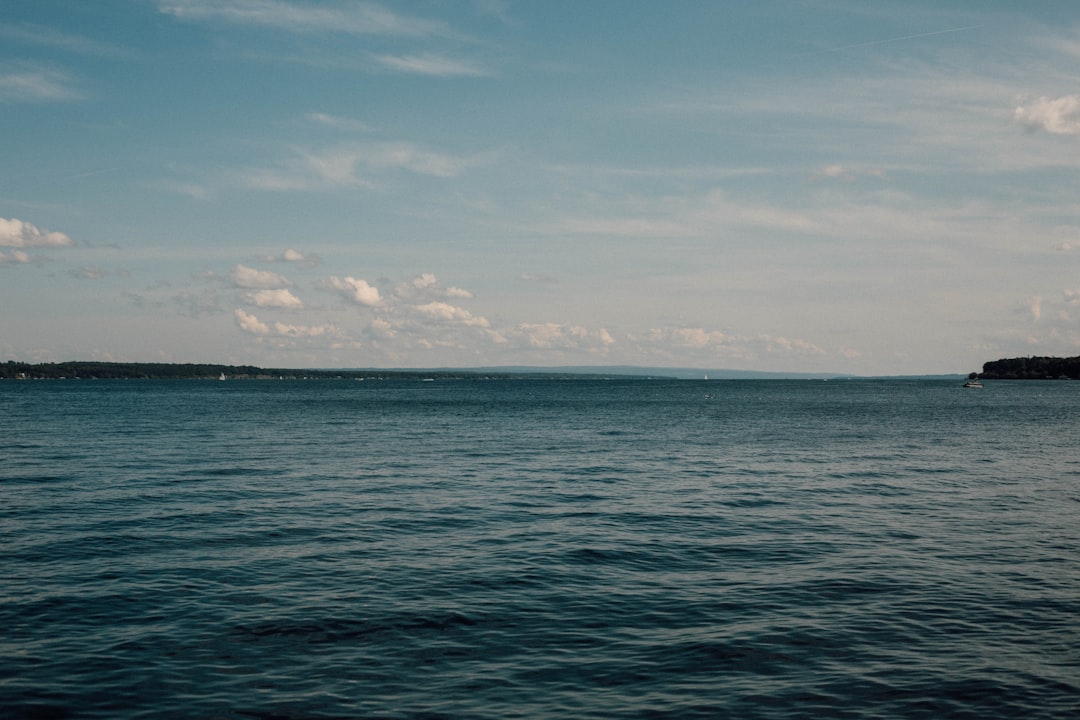
Seneca Lake is the largest of the Finger Lakes: 38 miles long, 618 feet deep at its maximum, and lined with more than 30 wineries, a handful of breweries, two state parks, and several waterfalls visible from the road. The loop road that traces its shoreline runs approximately 75 miles and takes about 2 to 3 hours of nonstop driving. But nobody drives it nonstop. With three or four winery stops, a waterfall detour, and lunch, plan for a full day — 6 to 7 hours is realistic, and 8 is easy if you linger.
You can start in Geneva at the north end or Watkins Glen at the south end. Both have lodging, dining, and fuel. This guide runs clockwise from Geneva: south down the east side on Route 414, through Watkins Glen at the bottom, and north up the west side on Routes 414 and 14 back to Geneva. The clockwise route puts you on the lake side of the road for most of the west-side return, which means better views from the driver’s seat.
Starting Point: Geneva
Geneva sits at Seneca Lake’s northern tip where the lake narrows to its outlet. The town has a walkable downtown along Exchange Street with restaurants, coffee shops, and the historic Smith Opera House. If you are staying in Geneva the night before, grab breakfast at Cafe 55 on Exchange Street. Fill up on gas here — stations thin out along both sides of the lake.
From downtown Geneva, pick up Route 14 South, which becomes Route 414 as you head along the east shore. The lake appears on your right within minutes.
The East Side: Geneva to Watkins Glen (Route 414)
The east side of Seneca Lake is the more developed of the two shores. Most of the Seneca Lake Wine Trail’s tasting rooms cluster here, along with restaurants and farm stands. The road hugs the shoreline for most of the 35-mile stretch, with the lake visible through rows of vines on the downhill side.
Key Stops on the East Side
Lamoreaux Landing Wine Cellars (mile 12): The Greek Revival tasting room sits on a bluff above the lake with a panoramic view. The dry Rieslings and Cabernet Franc are consistently among the best on the trail. Even if you are not stopping for wine, the building and the view merit a 10-minute pause. Open daily, 10 a.m. to 5 p.m. most of the year.
Red Newt Cellars and Bistro (mile 16): Red Newt Bistro serves a seasonal, farm-driven menu that ranks among the strongest restaurant kitchens on the lake. The wine list draws from their own production and other Finger Lakes estates. Open for lunch and dinner; hours vary seasonally. This is one of the best places to eat on the entire loop.
Wagner Vineyards (mile 18): A large, established operation with a tasting room, a brewery (Wagner Valley Brewing Company), and a deck overlooking the vineyards and the lake. Good for groups that include non-wine-drinkers — the brewery pours solid lagers and ales.
Hazlitt 1852 Vineyards (mile 20): The most casual vibe on the east side. A big outdoor lawn, picnic tables, a $5 tasting fee, and wines that lean sweet. Their Red Cat is the best-selling wine in the Finger Lakes. A good stop if you want to stretch your legs on the grass.
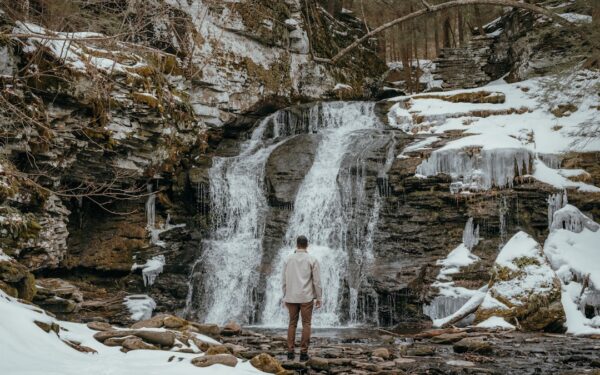
Hector Falls (mile 28): About 10 miles north of Watkins Glen, Hector Falls drops roughly 165 feet in a series of cascades visible directly from Route 414. There is a small pulloff on the right side of the road. The flow is strongest in spring and after heavy rains; by late August in a dry year, it thins.
The Bottom of the Loop: Watkins Glen
Route 414 delivers you into Watkins Glen at the southern tip of Seneca Lake. The village has a walkable downtown along Franklin Street with restaurants, shops, and tasting rooms. This is the natural midpoint for lunch if you did not eat at Red Newt.
Lunch Options in Watkins Glen
- Jerlando’s Ristorante and Pizza: Wood-fired pizza in a converted church. Cash only.
- Wildflower Cafe: Sandwiches and coffee sourced from local farms.
- Two Goats Brewing: Laid-back brewery with food trucks on summer weekends.
Detour: She-Qua-Ga Falls in Montour Falls
A 5-minute drive south on Route 14 brings you to Montour Falls, where She-Qua-Ga Falls drops 156 feet at the end of the village’s main street. The waterfall is visible from the road and from a small park at its base. Free, no entrance fee, and the total detour adds only 15 minutes to your loop. The falls run year-round and are illuminated at night — one of the most accessible large waterfalls in the Finger Lakes.
Watkins Glen State Park
If you have not already visited Watkins Glen State Park, the Gorge Trail is a 1.5-mile, 832-step climb through a slot canyon past 19 waterfalls. It takes 60 to 90 minutes one way. Adding it to the loop turns your day into an 8-to-10-hour affair. If you are doing the loop as a driving tour with winery stops, save the gorge for a separate day.
The West Side: Watkins Glen to Geneva (Routes 414 and 14)
The west side of the lake has a different character. The road climbs higher above the water, wineries are spaced farther apart, and the landscape is more agricultural — hay fields, pastures, and vineyard rows stretching uphill from the lake. Lake views from the west side tend to be broader and more dramatic because the road sits slightly elevated, and afternoon sun lights up the eastern shore across the water.
Key Stops on the West Side
Farm stands and seasonal markets: Between Watkins Glen and Dundee, several small farm stands operate from late June through October. Strawberries in June, sweet corn in August, apples and squash in September and October. These are folding tables in front of barns, often unmanned with an honor-system cash box. Pull over when you see one.
Grist Iron Brewing Company (Burdett, mile 8 from Watkins Glen): A farm brewery in a renovated barn with a rotating tap list emphasizing hop-forward ales made with New York-grown ingredients. The setting — a working farm with views south across the lake — is worth a stop even for one pint. Open Thursday through Sunday in season.
Hermann J. Wiemer Vineyard (mile 18): One of the founding estates of Finger Lakes winemaking. The dry Rieslings here are benchmark bottles. If you want to understand why wine critics take this region seriously, this is the tasting room that makes the case. The property is meticulously maintained and the staff is knowledgeable without being pretentious. Tastings by reservation recommended in peak season.
Fox Run Vineyards (mile 20): Their Taste Buds experience pairs wines with small bites designed around the five taste receptors — a popular and educational format. Deli counter for sandwiches, patio overlooking the lake. One of the best all-around stops on Seneca Lake.
Scenic overlooks (miles 22-30): The stretch between Fox Run and Geneva offers several informal pulloffs where the road crests above the lake. In October, the fall foliage on the far shore turns the lake into a reflecting pool of orange, red, and gold. Watch for wide shoulders and gravel pulloffs — there are no marked overlooks with signs.
Billsboro Winery (mile 32): Near the north end of the west side. A small-production operation with a tasting room and deck directly on the lakeshore. Intimate and quiet — a good final stop before completing the loop.
East Side vs. West Side
The east side (Route 414) is more developed: wineries close together, busier road, more commercial infrastructure. The concentration of high-quality tasting rooms within a 20-mile stretch is the densest in the Finger Lakes. The west side (Route 14) is quieter and more rural, with wider lake views and fewer restaurants and services. For a detailed winery-by-winery guide, see our Seneca Lake Wine Trail map and route planner.
Best Time of Year
October (Peak)
Fall foliage peaks around Seneca Lake in the first two weeks of October. Hillsides turn deep orange and red, temperatures sit in the 50s and 60s, and wineries are mid-harvest. The vineyards are at their most photogenic, with leaves turning gold between the vine rows. The trade-off: this is the busiest time on the wine trail. Expect longer waits at popular tasting rooms on weekends.
June Through September
Warm weather (highs in the 70s and 80s), long days, and full operating hours everywhere. Weekdays in June and September are the sweet spot — warm enough for comfortable driving, uncrowded enough for easy parking.
Late April Through May
Hillsides green up fast and the waterfalls — Hector Falls, She-Qua-Ga Falls — run strongest from snowmelt. Many tasting rooms are open on reduced schedules. Crowds are minimal. Good for the drive itself if winery-hopping is secondary.
Practical Tips
- Gas up in Geneva or Watkins Glen. Fuel stations are sparse on the east side and almost nonexistent on the rural west side.
- Start by 10 a.m. Most tasting rooms open at 10 or 11 and close by 5 or 6.
- Designate a driver. The alcohol accumulates across multiple tastings. See our guide on how many wineries you can realistically visit in a day.
- Bring a cooler. Wine bottles stay at temperature in the trunk, especially in summer.
- Check hours. Smaller wineries keep seasonal and sometimes erratic schedules.
For more on the lake’s depth and geology, see how deep Seneca Lake really is. For the best lakeside spots to end the day, our sunset spots on Seneca Lake covers the top overlooks. And for a comprehensive overview, see our Seneca Lake guide.