The Two Big Lakes
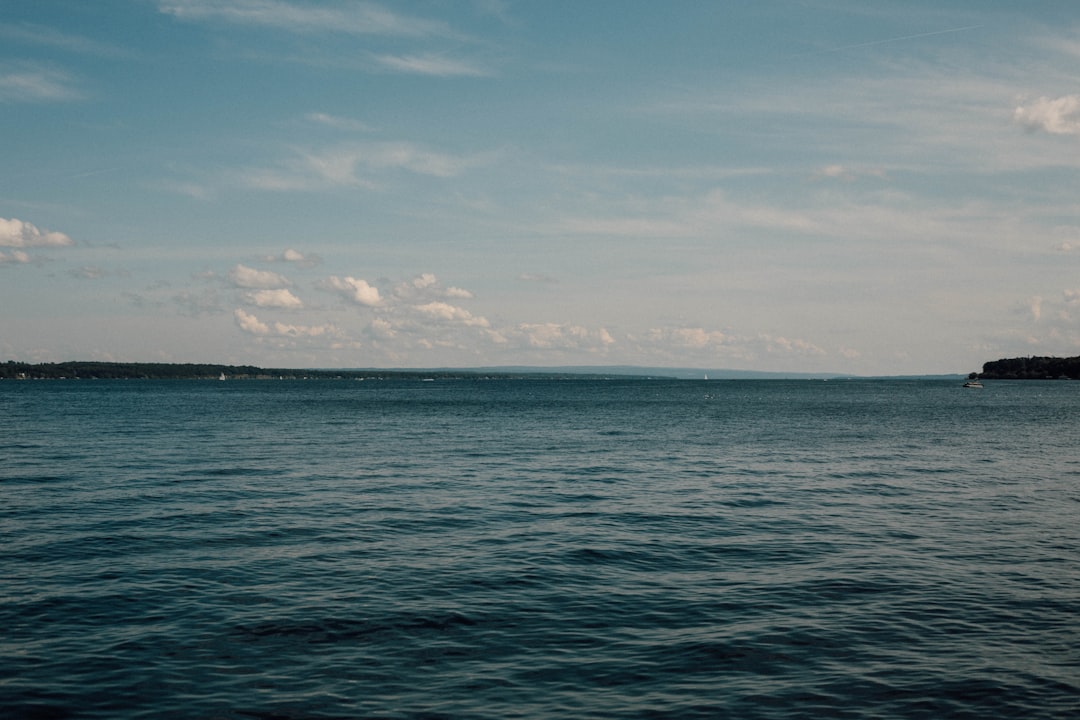
Seneca Lake and Cayuga Lake are the dominant bodies of water in the Finger Lakes region. They run parallel, separated by a 20-mile-wide ridge, connected at their northern ends by the Seneca-Cayuga Canal. They are nearly identical in length — Seneca at 38 miles, Cayuga at 38.2 miles. And they get compared by every visitor trying to figure out where to spend a long weekend.
The comparison is natural but slightly misleading, because these lakes attract different types of trips. Seneca is the wine lake — more tasting rooms, more beverage-focused infrastructure, more weekend visitors driving the loop with a designated driver. Cayuga is the culture-and-nature lake — it has Ithaca, the gorges, the college-town energy, and a food scene that operates independently of the wine trail. Choosing between them is less about which is better and more about what you are in the mood for.
Wine: Seneca Wins on Volume, Cayuga Wins on History
Seneca Lake has the larger wine trail, by a significant margin. The Seneca Lake Wine Trail counts more than 30 member wineries along a 45-mile loop, with tasting rooms clustered closely enough that you can visit four or five in an afternoon without rushed driving. The quality at the top end is high — Hermann J. Wiemer, Ravines Wine Cellars, Boundary Breaks, and Lamoreaux Landing are all Seneca producers, and each one makes wine that competes at a national level. The sheer density of options means you can taste across styles, price points, and philosophies in a single day.
Cayuga Lake has fewer wineries — roughly 15 on the Cayuga Lake Wine Trail — but it holds a distinction that matters: it was the first organized wine trail in the United States, established in 1983. The trail also includes cideries, a meadery, and distilleries among its members, and the entire trail is dog-friendly, which matters if you travel with a pet. The wineries on Cayuga tend to be smaller and more personal. Sheldrake Point, Buttonwood Grove, and Hosmer Winery all produce excellent wine in settings that feel intimate rather than commercial.
The bottom line: if wine is the primary purpose of your trip, Seneca offers more options and more variety. If you want wine as one component of a broader trip — mixed with gorge hikes, farm visits, and cider tastings — Cayuga integrates it more naturally.
The Towns: Geneva vs. Ithaca
The character of each lake is defined by its anchor town. Seneca has Geneva at the north end, and Cayuga has Ithaca at the south end. These towns could not be more different in personality.
Geneva (population around 13,000) is a small city with an outsized food and drink scene. Linden Street and Exchange Street downtown hold more interesting restaurants per block than most cities three times its size. FLX Table, a 24-seat tasting-menu restaurant run by a Master Sommelier, books out weeks in advance. Kindred Fare sources from over 30 regional farms. The town is walkable, the lakefront is accessible, and the overall vibe is polished without being pretentious. Geneva feels like a food-and-wine destination that happens to sit on a lake.
Ithaca (population around 32,000, roughly 50,000 when Cornell and Ithaca College are in session) is a college town through and through. The energy is younger, more eclectic, more politically engaged. The Ithaca Commons pedestrian mall is lined with independent bookstores, ethnic restaurants, and shops that resist chain-store homogeneity. Moosewood Restaurant has been serving vegetarian food since 1973. The Ithaca Farmers Market at Steamboat Landing is one of the largest in the Northeast. Ithaca feels like a small city that happens to sit among gorges.
Neither is better. Geneva suits visitors who want a polished, food-focused home base. Ithaca suits visitors who want a culturally dense, walkable town with a DIY spirit. For more detail, see our Geneva town guide and Ithaca town guide.
Outdoor Access: Cayuga Has the Edge
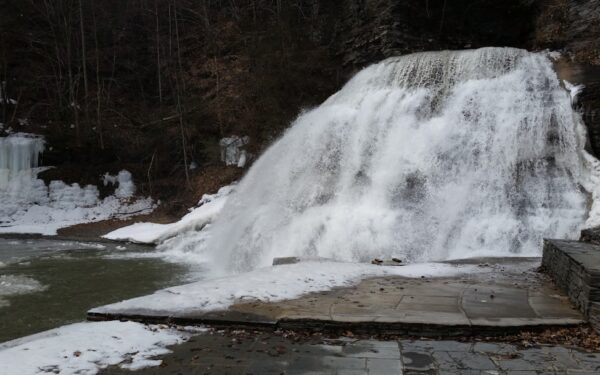
Both lakes are surrounded by dramatic landscapes, but Cayuga’s concentration of gorges and waterfalls is unmatched in the region — or, arguably, in the entire Northeast. Within 10 miles of Ithaca, more than 150 waterfalls cut through layers of shale and limestone. Taughannock Falls (215 feet, taller than Niagara) is on Cayuga’s west shore. Robert H. Treman State Park and Buttermilk Falls State Park, both with swimming holes and gorge trails, are minutes from downtown Ithaca. Cascadilla Gorge runs from the Cornell campus to the center of town, delivering eight waterfalls on a trail you can walk during a lunch break.
Seneca has Watkins Glen State Park at its southern tip — 19 waterfalls in a two-mile gorge, and the single most visited natural attraction in the Finger Lakes. It is extraordinary. But beyond Watkins Glen, the outdoor offerings on Seneca are less concentrated. The Finger Lakes National Forest (the only national forest in New York State) sits on the ridge between Seneca and Cayuga, accessible from either lake. Seneca Lake State Park in Geneva has a swimming beach and marina but no gorge hiking.
If outdoor recreation is your priority — hiking, gorge trails, waterfall chasing, swimming in natural pools — Cayuga Lake delivers more options with less driving.
Swimming and Water Access
Both lakes offer public swimming, but the experiences differ. Seneca Lake State Park in Geneva has a sandy beach, a sprayground for kids, and lifeguards in summer. Clute Memorial Park at the Watkins Glen end provides free lake access. Seneca Lake’s water stays cold deep into summer because of its extreme depth (618 feet), but the surface warms enough for comfortable swimming by mid-July.
Cayuga Lake has Taughannock Falls State Park beach on the west shore, Stewart Park (free) in Ithaca, and Long Point State Park on the east shore. Cayuga’s maximum depth is 435 feet — still deep, still cold in the deeper layers, but surface temperatures are comparable to Seneca by midsummer.
For swimming beyond the lakes, Cayuga has a clear advantage: the natural swimming holes at Robert H. Treman and Buttermilk Falls state parks — creek-fed pools at the base of waterfalls, surrounded by gorge walls — are among the best freshwater swimming spots in the region.
Depth, Size, and Character on the Water
Seneca Lake is the deepest Finger Lake at 618 feet and the largest by volume — it holds more water than all the other Finger Lakes combined. It never fully freezes. The depth creates a thermal mass that moderates temperatures on the surrounding hillsides, which is why so many vineyards thrive here. For boaters and anglers, Seneca’s depth supports a premier lake trout fishery, with fish regularly exceeding 10 pounds.
Cayuga Lake is the longest at 38.2 miles and the second deepest at 435 feet. It is narrower than Seneca — about 1.75 miles across on average — which means the opposite shore is always visible and the landscape feels more intimate. Cayuga is known for diverse fishing: largemouth bass in the weedy northern shallows, lake trout and salmon in the deep center, and rainbow trout running the tributaries in spring.
On the water, the practical difference is wind. Both lakes are long and narrow, and both can develop 3- to 4-foot waves when wind funnels through the valleys. Kayakers and small-boat paddlers should check the forecast before heading out on either lake and stay close to shore when conditions are uncertain.
Dining and Drink Beyond Wine
Geneva’s dining scene is covered above, but the Seneca Lake corridor adds Red Newt Bistro in Hector (one of the best winery restaurants in the region) and Dano’s Heuriger in Lodi (a cash-only, BYOB Austrian wine tavern that is one of the most unique dining experiences in upstate New York).
Ithaca and the Cayuga corridor counter with volume and diversity. Moosewood, Hazelnut Kitchen in Trumansburg, the Ithaca Bakery, Nong’s Thai Kitchen — the range of cuisines reflects Ithaca’s university population. Cayuga also has a growing cider scene: South Hill Cider and the Finger Lakes Cider House are both on the Cayuga side and produce some of the most interesting fermented beverages in the state.
For breweries, Ithaca Beer Company is the largest craft brewery in the Finger Lakes and operates a taproom with 20-plus beers on tap. On the Seneca side, Two Goats Brewing near Hector has the best sunset patio of any brewery in the region.
How Far Apart Are They?
The two lakes are close. Geneva (north end of Seneca) to Ithaca (south end of Cayuga) is about 50 miles, roughly an hour’s drive. You can visit both on a single trip without difficulty. The ridge between the lakes — where the Finger Lakes National Forest sits — is only about 20 miles wide, and several east-west roads cross it. A common itinerary is to base in Geneva and day-trip to Ithaca, or vice versa.
The Honest Bottom Line
Choose Seneca Lake if: Wine is your primary interest. You want the largest selection of tasting rooms. You prefer a polished, food-focused base town (Geneva). You plan to visit Watkins Glen State Park. You are interested in the NASCAR and racing scene.
Choose Cayuga Lake if: You want gorge hikes, waterfalls, and natural swimming holes. You prefer a college-town atmosphere with diverse restaurants and cultural options (Ithaca). You are interested in cider. You are traveling with a dog (the Cayuga Lake Wine Trail is entirely dog-friendly). You want a broader mix of outdoor activities beyond wine touring.
Choose both if: You have three or more days. The lakes are close enough that splitting time between them is easy, and the experiences are different enough that doing so does not feel repetitive.