The Deepest Lake in the East
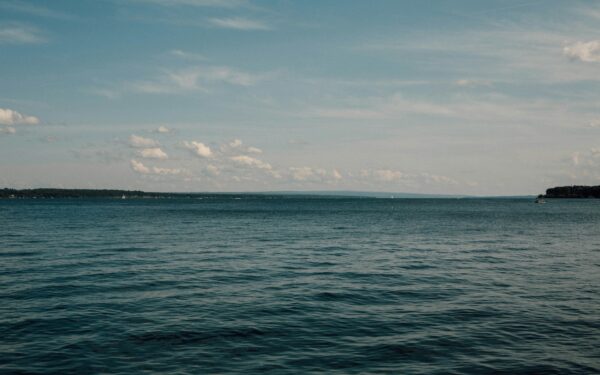
Seneca Lake drops 618 feet below the surface at its deepest point, making it the deepest lake in the eastern United States outside the Great Lakes. That depth means two things: the water stays cold enough to support a massive lake trout population year-round, and the thermal mass moderates temperatures along the hillsides above — which is why grapes grow here in a region where they otherwise wouldn’t survive.
At 38 miles long and 3.2 miles across at its widest point, Seneca holds more water than all the other Finger Lakes combined. It never fully freezes. On the rare occasions when ice forms near the shoreline in January, it cracks and groans loud enough to hear from the road — a sound locals call “Seneca drums,” and one the Seneca people attributed to the lake’s spirit.
The Wine Trail
More than 30 wineries line the shores of Seneca Lake, concentrated along the Seneca Lake Wine Trail — the first organized wine trail in the Finger Lakes, established in 1986. The east side tends toward warmer-climate varietals; the west side runs cooler. That distinction matters if you’re tasting seriously.
The lake’s influence on the microclimate is not subtle. Hillside vineyards above the water sit in a thermal belt that can be 10 to 15 degrees warmer than the hilltops just a few hundred feet higher. This is what makes Riesling, Gewurztraminer, and increasingly Cabernet Franc viable at a latitude that would otherwise be too cold for vinifera grapes.
Notable Stops on the Wine Trail
- Hermann J. Wiemer Vineyard — One of the founding estates of serious Finger Lakes winemaking. The dry Rieslings here set the regional standard.
- Ravines Wine Cellars — Run by a former Corton-Charlemagne winemaker. The dry Riesling and Cabernet Franc are consistently among the best in the region.
- Lamoreaux Landing Wine Cellars — The Greek Revival tasting room on the east side has one of the better views of any winery in the Finger Lakes.
- Boundary Breaks — Exclusively Riesling. The vineyard sits 800 feet above the lake on the east side, and the wines are precise and mineral-driven.
Watkins Glen and the South End
Watkins Glen sits at the southern tip of Seneca Lake and serves as the gateway to two very different attractions. Watkins Glen State Park draws roughly a million visitors annually to walk through a two-mile gorge with 19 waterfalls — the stone walls rise 200 feet on either side, and during peak season in July and August, expect company. Go early in the morning or late in the afternoon to avoid the worst crowds. The park opens at sunrise and charges no vehicle fee before the booth is staffed.
The other draw is Watkins Glen International, the road racing circuit south of town. The track hosts NASCAR, IMSA, and vintage racing events from June through September. Race weekends fill every hotel room within 30 miles; book months in advance or plan to camp.
Geneva and the North End
Geneva anchors the northern end of Seneca Lake and has quietly become one of the best food towns in upstate New York. South Main Street runs downhill toward the water with a mix of restaurants, tasting rooms, and shops in 19th-century commercial buildings. The town’s population is around 13,000, but it punches well above its weight for dining.
Seneca Lake State Park sits at the north end, just east of downtown Geneva, and provides one of the few public swimming beaches on the lake along with a marina and boat launch.
Fishing
Seneca Lake holds the self-designated title “Lake Trout Capital of the World,” and while that’s promotional language, it’s not empty. The New York State DEC stocks lake trout here annually, and the deep, cold water provides ideal habitat. The lake trout fishery is one of the most productive in the northeastern United States, with fish regularly exceeding 10 pounds and occasional catches over 20.
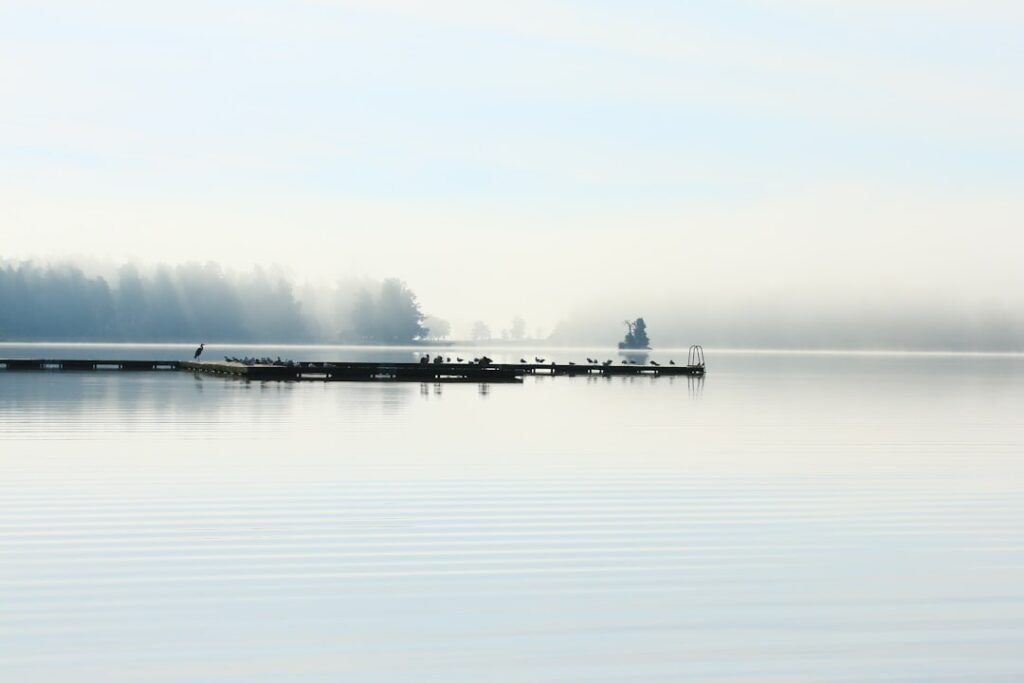
Beyond lake trout, Seneca holds brown trout, rainbow trout, landlocked salmon, smallmouth bass, and yellow perch. The drop-offs along the east shore are particularly productive for trout in spring and fall. Charter services operate out of Geneva, Dresden, and Watkins Glen.
Getting There and Getting On the Water
Seneca Lake runs roughly north-south through Schuyler and Seneca counties. Geneva is at the north end, Watkins Glen at the south. Routes 14 (west side) and 414 (east side) run the full length of the lake — the loop drive takes about 90 minutes without stops, but plan for a full day if you’re visiting wineries.
Public Access Points
- Seneca Lake State Park (Geneva) — Swimming, boat launch, marina, picnic areas
- Clute Memorial Park (Watkins Glen) — Boat launch, swimming, camping
- Sampson State Park (east side, Romulus) — Full campground, boat launch, swimming beach on the site of a former naval base
- Lodi Point State Marine Park (east side) — Boat launch and fishing access
Distances
- Rochester: 55 miles to Geneva (about 1 hour)
- Syracuse: 55 miles to Geneva (about 1 hour)
- Ithaca: 20 miles to Watkins Glen (about 30 minutes)
- New York City: 250 miles to Watkins Glen (about 4.5 hours)
When to Go
Wine trail season runs from April through November, with the busiest weekends in July, August, and during the fall harvest in September and October. Fishing is best from April through June and again in September and October when lake trout move into shallower water. Summer weekends at Watkins Glen State Park can mean long waits for parking — if you’re visiting in July or August, arrive before 9 AM or go on a weekday.