The eleven Finger Lakes hold more diverse fisheries than most anglers realize. These are “two-story” lakes — cold-water species like lake trout and landlocked Atlantic salmon live deep, in water 50 to 300 feet below the surface, while warm-water species like largemouth bass, smallmouth bass, and perch hold in the shallow, weedy bays and inlets. Some of these lakes rank among the best fisheries in the northeastern United States for specific species, and the fishing pressure, even in peak season, is a fraction of what you find on comparable Great Lakes tributaries.
Understanding Two-Story Fisheries
The deep Finger Lakes — Seneca (618 feet deep), Cayuga (435 feet), Keuka (186 feet), Skaneateles (315 feet), and Canandaigua (276 feet) — maintain cold-water temperatures below the thermocline year-round. This allows them to support lake trout, rainbow trout, brown trout, and landlocked salmon at depth alongside warm-water populations of bass, perch, pike, and panfish in the shallows.
The shallow western lakes — Honeoye (30 feet max depth), Conesus (66 feet), Hemlock (91 feet), Canadice (95 feet), and Otisco (66 feet) — behave differently. They lack the deep cold-water refuges, so their fisheries lean warm-water: bass, walleye, tiger muskie, and panfish. They also freeze earlier and harder in winter, making them the region’s primary ice fishing destinations.
Lake-by-Lake Breakdown
Seneca Lake — Lake Trout Capital
Seneca is the deepest Finger Lake at 618 feet and holds what is arguably the best lake trout fishery in the world outside of the Great Lakes. Lake trout here commonly exceed 10 pounds, with fish over 20 pounds landed every season. The lake also supports landlocked Atlantic salmon, brown trout, and rainbow trout.
Most lake trout fishing on Seneca happens by trolling with downriggers, running spoons and stickbaits at 80 to 150 feet deep during summer. In spring and fall, when the water column is cooler and more uniform, trout move shallower and can be taken at 30 to 60 feet. Shore fishing for trout is limited by Seneca’s steep drop-offs, but the tributaries at both ends of the lake offer spring and fall trout runs.
The National Lake Trout Derby takes place on Seneca Lake each May, drawing hundreds of boats and offering cash prizes for the largest fish. It is the biggest fishing tournament in the Finger Lakes and a useful benchmark for what the lake is producing in a given year.
Cayuga Lake — Bass and Diversity
Cayuga is the longest Finger Lake at 38.2 miles and supports the most diverse fishery in the region. The southern end, near Ithaca, has extensive weed beds and shallow flats that produce excellent largemouth bass fishing. The northern end, near Seneca Falls, holds large smallmouth bass along rocky points and drop-offs.
Cayuga also has a strong lake trout population, though the fish tend to run smaller than Seneca’s. Brown trout and rainbow trout enter the tributaries in fall and spring respectively. Yellow perch are abundant throughout the lake and provide consistent action for panfish anglers, especially through the ice in winter.
Skaneateles Lake — Smallmouth Bass and Rainbow Trout
Skaneateles is the cleanest Finger Lake — it serves as the unfiltered public water supply for the City of Syracuse, and its clarity regularly exceeds 30 feet. That clarity makes for excellent sight-fishing for smallmouth bass along the rocky shoals and points that line both shores. Smallmouth here average 2 to 3 pounds, with fish over 4 pounds taken regularly.
Rainbow trout stocked by the DEC provide good trolling opportunities in spring and fall. The lake also holds brown trout and lake trout at depth. Note that Skaneateles has restricted boat launch access — the only public launch is at the village pier in the town of Skaneateles, and it has limited parking.
Keuka Lake — Lake Trout and Perch
Keuka is the only Y-shaped Finger Lake, forking into two branches at its northern end. The deep trough running down the center holds a healthy lake trout population, with fish averaging 3 to 6 pounds and occasional specimens over 10. The shallow bays at the forks — particularly the Branchport arm — produce yellow perch in impressive numbers. Perch fishing on Keuka is especially productive in late fall and early spring.
Public boat launches are at Hammondsport (south end), Penn Yan (northeast fork), and Branchport (northwest fork). Keuka also has a strong tradition of guiding services, with several charter captains operating out of Hammondsport and Penn Yan.
Conesus and Otisco — Tiger Muskie and Walleye
The shallow western lakes offer a completely different fishing experience. Conesus Lake, 8 miles long and only 66 feet at its deepest, is stocked with tiger muskie by the DEC and produces fish over 40 inches each season. It also holds walleye, largemouth bass, and northern pike. Otisco Lake, the easternmost Finger Lake near Syracuse, has a similar warm-water fishery with walleye as the headline species.
Both lakes freeze reliably by late December or early January, making them popular ice fishing destinations for walleye, perch, and pike.
Honeoye Lake — Panfish and Ice Fishing
Honeoye is the shallowest Finger Lake at just 30 feet maximum depth. It warms fast in spring, which makes it one of the earliest lakes in the region to produce good bass and panfish action. Largemouth bass, bluegill, and crappie are the primary targets. In winter, Honeoye freezes early and draws steady ice fishing pressure for panfish and perch.
Seasonal Fishing Calendar
Spring Tributary Runs: March and April
The most exciting fishing in the Finger Lakes happens in the tributaries during spring. Rainbow trout run up the feeder creeks starting in mid-March, and the two most productive streams are Catharine Creek (entering the south end of Seneca Lake near Watkins Glen) and Naples Creek (entering the south end of Canandaigua Lake in Naples).
Catharine Creek draws the largest crowds and for good reason: the DEC stocks it heavily with rainbow trout, and the fish stack up in pools along Catharine Creek Marsh. Naples Creek runs through the village of Naples and offers a more intimate, walk-and-wade experience. Both creeks fish best from mid-March through mid-April, depending on water temperature and flow.
Summer: Deep Trolling and Bass
From June through August, lake trout and salmon retreat to deep, cold water on the deep lakes. Trolling with downriggers is the primary method, and guided charters out of Watkins Glen, Geneva, and Hammondsport put clients on fish consistently. Warm-water anglers focus on bass in the shallows — topwater action for largemouth is best at dawn and dusk on Cayuga, Honeoye, and Conesus.
Fall: Trophy Trout and Salmon
As water temperatures drop in September and October, lake trout and salmon move shallower and become more accessible. Fall is prime time for trophy lake trout on Seneca and Cayuga. Brown trout run the tributaries in October and November, with Cayuga Inlet and Fall Creek near Ithaca among the most productive streams.
Winter: Ice Fishing
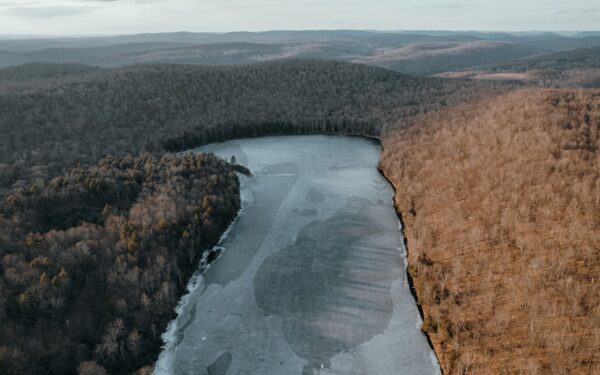
The deep lakes rarely freeze completely, but the shallow western lakes — Honeoye, Conesus, and Otisco — typically have safe ice by mid-January. Walleye, perch, and pike are the main targets. Always check local ice conditions and thickness before venturing out; 4 inches of clear ice is the minimum for foot travel.
Practical Information
Licenses
A New York State fishing license is required for all anglers 16 and older. Licenses are available online through the NYS DEC website, at most sporting goods stores, and at Walmart locations throughout the region. A one-day license costs $10 for residents, a season license is $25. Non-resident season licenses are $50. There is no separate license required for any of the Finger Lakes specifically.
Regulations
The Finger Lakes fall within DEC Region 7 (Cayuga, Seneca, Keuka, Owasco) and Region 8 (Canandaigua, Honeoye, Conesus, Hemlock, Canadice). Lake trout on Seneca and Cayuga have a minimum size of 15 inches and a daily limit of 3. Bass season opens the third Saturday in June for harvest, though catch-and-release bass fishing is legal year-round. Always check the current DEC regulations guide for specific waters, as rules change periodically.
Boat Launches
Every major Finger Lake has at least one free public boat launch maintained by the DEC or local municipalities. Seneca Lake has launches at Watkins Glen, Sampson State Park, Geneva, and Lodi. Cayuga Lake has launches at Ithaca, Taughannock Falls State Park, Long Point State Park, and Union Springs. Canandaigua has a DEC launch at Woodville and a municipal launch at the city pier. Launch fees, where they exist, are typically $7–$10 per vehicle.
Guide Services
Charter fishing is well established on Seneca, Cayuga, and Keuka. Most charters run 4 to 6 hours, accommodate 2 to 4 anglers, and cost $350–$500 per trip. The captain provides the boat, tackle, and fish-finding electronics; you provide the license and the lunch. Spring and fall book up early — reserve charters at least a month ahead for peak season dates.