Why Riesling Thrives in the Finger Lakes
The short version: geology and climate conspired to create one of the best Riesling-growing regions in the world, and it took a stubborn Ukrainian immigrant to prove it.
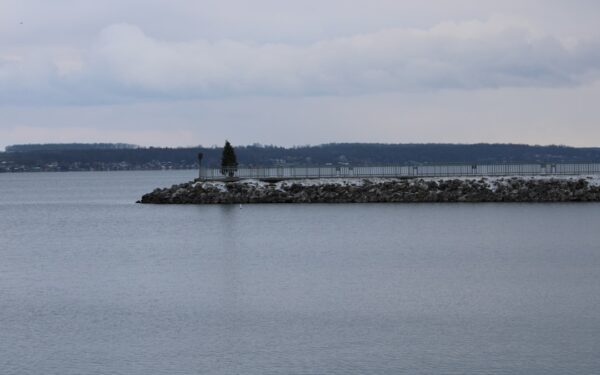
The long version starts with the glaciers. The ice sheets that carved the Finger Lakes 14,000 years ago left behind deep, narrow bodies of water that act as thermal batteries. Seneca Lake, at 618 feet deep, never fully freezes. That stored heat moderates the air temperature on the surrounding hillsides, keeping vineyards several degrees warmer in winter and cooler in summer than the hilltops just a few hundred feet higher. This thermal belt — the narrow band of lake-moderated climate where temperatures stay mild enough for grape survival — is where virtually every serious Finger Lakes vineyard is planted.
The soils matter too. Glacial activity deposited thin layers of shale, limestone, and slate over the hillsides above the lakes. These well-drained, mineral-rich soils force grape vines to work for their water, which concentrates flavors in the fruit and contributes the mineral character — that flinty, stony quality — that distinguishes Finger Lakes Riesling from Riesling grown in warmer, richer soils.
And then there is the climate itself. The Finger Lakes sit at roughly 42 degrees north latitude, comparable to Burgundy and the Mosel in Germany. The growing season is short — budbreak in late April, harvest from September through November — and the cool temperatures mean grapes ripen slowly, preserving the natural acidity that gives Riesling its backbone. High-acid wines age well, pair well with food, and taste alive in the glass. This is the fundamental advantage of cool-climate winemaking, and Riesling expresses it better than any other grape variety.
Dr. Konstantin Frank and the Vinifera Revolution
None of this would have mattered commercially without Dr. Konstantin Frank. When Frank arrived in the Finger Lakes in the 1950s, the conventional wisdom among local grape growers was that European Vitis vinifera varieties — Riesling, Chardonnay, Pinot Noir — could not survive New York winters. The region produced wine from native American grapes (Concord, Catawba, Niagara) and French-American hybrids, but not from the varieties that made the great wines of Europe.
Frank disagreed. He had grown vinifera grapes in Ukraine at temperatures far colder than anything the Finger Lakes experienced. He convinced Charles Fournier at Gold Seal Vineyards to let him plant vinifera on Keuka Lake, and the vines survived. By the 1960s, Frank was producing Riesling, Gewurztraminer, and Pinot Noir from his own estate above Hammondsport. The established industry fought him — the hybrid-grape growers saw vinifera as a threat — but the quality of his wines was undeniable.
Dr. Konstantin Frank Vinifera Wine Cellars still operates on the hillside above Keuka Lake, now run by the fourth generation of the Frank family. Their Dry Riesling remains one of the benchmarks of the region. The estate is both a working winery and a living monument to the idea that the Finger Lakes could compete with the world’s best cool-climate wine regions. That idea is no longer controversial.
The Dry-to-Sweet Spectrum
The biggest misconception about Riesling — and the one that costs the Finger Lakes the most potential customers — is that Riesling is a sweet wine. Some Riesling is sweet. Some is bone-dry. Most falls somewhere in between. Understanding the spectrum is the key to finding Riesling you enjoy.
Dry Riesling
A dry Riesling has little to no residual sugar. What you taste instead is fruit (citrus, green apple, stone fruit), minerality (that slate-and-flint character), and acid. The acid is important: it is what makes dry Riesling one of the most versatile food wines in the world. A well-made dry Riesling from the Finger Lakes can stand next to a great Chablis or Sancerre in terms of structure and precision.
If you think you do not like Riesling because you had a sweet one and found it cloying, try a Finger Lakes dry Riesling. It is a completely different experience.
Semi-Dry (Off-Dry) Riesling
This is where many Finger Lakes producers excel and where the region’s house style arguably lives. A semi-dry Riesling has a touch of residual sugar — typically 1 to 3 percent — balanced by Riesling’s naturally high acidity. The sugar is not there to make the wine taste sweet; it is there to round out the texture and amplify the fruit character. Done well, the sugar and acid balance each other so precisely that the wine does not taste sweet at all — it tastes rich. This is the Riesling that converts skeptics.
Sweet and Late-Harvest Riesling
At the sweet end of the spectrum, Finger Lakes producers make dessert-style Rieslings with residual sugar above 5 percent. Late-harvest Rieslings — made from grapes left on the vine into November to concentrate sugar — can reach extraordinary intensity. Ice wine, made from grapes harvested frozen on the vine in December or January, is the rarest and most concentrated expression. These are not everyday drinking wines; they are small-pour, end-of-meal experiences, and the best Finger Lakes examples rival German Auslese and Beerenauslese in quality.
Reading the Label: The International Riesling Foundation Scale
Many Finger Lakes Riesling producers use the International Riesling Foundation (IRF) taste profile scale on their back labels. The scale is a simple visual spectrum from dry to sweet, with an arrow indicating where the specific wine falls. It is the most reliable way to know what you are getting before you open the bottle.
The scale has four categories:
- Dry — Less than 1% residual sugar, or sugar balanced by high acid so the wine tastes dry
- Medium Dry — Perceptible but restrained sweetness, balanced by acidity
- Medium Sweet — Noticeable sweetness, still balanced
- Sweet — Dessert-style wines with pronounced sweetness
Not every producer uses the IRF scale. When it is absent, look for the terms “Dry Riesling” or “Semi-Dry Riesling” on the front label. If the label says only “Riesling” with no sweetness indicator, ask before buying — it could be anywhere on the spectrum.
Top Finger Lakes Riesling Producers
Hermann J. Wiemer Vineyard
Wiemer arrived from the Mosel in Germany and planted what many critics now consider the finest Riesling estate in North America. Under current winemaker Fred Merwarth, the wines have become even more precise, with single-vineyard bottlings from the HJW and Magdalena vineyards that showcase terroir differences across the Seneca Lake hillside. The dry Rieslings have a minerality that lingers for minutes after you swallow. The Josef vineyard Riesling, a newer release, is aged on the lees for extended complexity. Located on Route 14 in Dundee. Open daily; reservations recommended for groups.
Dr. Konstantin Frank Vinifera Wine Cellars
The estate that started it all. The Dry Riesling is the flagship, consistently ranked among the best in the country and priced well below comparable bottles from the West Coast or Europe. The Old Vines Riesling, sourced from some of the oldest vinifera plantings in the eastern United States, has a depth that rewards cellaring. The Rkatsiteli — a Georgian grape variety that Frank championed — is worth trying for something you will not find anywhere else in the region. Located above Keuka Lake near Hammondsport.
Ravines Wine Cellars
Morten Hallgren trained in Bordeaux, but his Dry Riesling is the wine that put Ravines on the map. It is structured, precise, and one of the best values in the Finger Lakes — usually under $20. The Argetsinger Vineyard Riesling is the single-site expression, with more weight and complexity. Ravines also produces an excellent Cabernet Franc, making it a strong stop for visitors who want to explore beyond Riesling. Two tasting locations: Geneva (Seneca Lake) and Hammondsport (Keuka Lake).
Red Newt Cellars
Winemaker Kelby Russell focuses on single-vineyard Rieslings from sites across Seneca Lake — Glacier Ridge, Sawmill Creek, Tango Oaks — and the differences between them are genuinely instructive. Tasting through a Red Newt lineup is one of the best ways to understand how terroir works in the Finger Lakes. The on-site Bistro pairs wine with food at a level that most winery restaurants do not attempt. Located on Route 414 in Hector.
Forge Cellars
Louis Barruol (of Chateau St. Cosme in the Rhone Valley) and local winemaker Rick Rainey founded Forge with a specific thesis: that Seneca Lake’s east side produces Riesling with distinct site character, and that the wines are good enough to deserve single-vineyard bottlings comparable to Burgundy’s cru system. The Classique is the entry point — a blend of sites that drinks well above its price. The single-vineyard bottlings (Dry Riesling from specific blocks on the east side of Seneca) are allocated and sell out. A serious producer making a serious argument for Finger Lakes Riesling on the world stage.
Boundary Breaks Vineyard
Boundary Breaks focuses almost exclusively on Riesling, producing multiple bottlings from a steep east-facing slope above Seneca Lake. The numbered series (No. 198, No. 239) refers to specific vineyard blocks. The wines are intense and mineral-driven — the site’s thin soils and high elevation concentrate character in ways that broader blends do not. The ice wine, when available, is extraordinary. Located on Route 414; open Thursday through Monday in season.
Food Pairings
Riesling is one of the most food-friendly wines in the world, and this is not an exaggeration — it is a structural fact. The combination of high acidity, moderate alcohol (Finger Lakes Rieslings typically range from 11 to 13 percent), and a broad sweetness spectrum means there is a Riesling for virtually every dish.
- Dry Riesling pairs with shellfish, raw oysters, grilled fish, sushi, goat cheese, and salads with vinaigrette. The acidity cuts through richness and matches the brightness of raw preparations.
- Semi-Dry Riesling is the classic pairing for spicy food — Thai, Indian, Sichuan, Mexican. The touch of residual sugar tames capsaicin heat while the acidity keeps the palate refreshed. It also pairs exceptionally with pork, roasted chicken, and soft-ripened cheese.
- Sweet and Late-Harvest Riesling pairs with foie gras, blue cheese, and fruit-based desserts. A great late-harvest Riesling with a wedge of Roquefort is one of the finest pairings in wine.
Several Finger Lakes restaurants build their menus around these pairings. Red Newt Bistro on Seneca Lake and Fox Run Vineyards’ Taste Buds flights are designed specifically to demonstrate Riesling’s range with food. Our restaurant guide covers the full Finger Lakes dining scene, and our winery guide profiles the top tasting rooms on every trail.
How to Read a Finger Lakes Wine Label
A few things to look for when shopping for Finger Lakes Riesling, whether at a tasting room or a wine shop:
- AVA (American Viticultural Area): Finger Lakes is the broad AVA. Seneca Lake and Cayuga Lake are sub-AVAs that indicate more specific growing conditions. A wine labeled “Seneca Lake” was made from grapes grown within the Seneca Lake AVA.
- Estate Bottled: The winery grew the grapes, made the wine, and bottled it on their property. This indicates a higher level of control over the entire process.
- Single Vineyard: The grapes come from one specific vineyard site. These wines express the character of a particular location and are typically a producer’s premium offerings.
- Vintage Year: Finger Lakes vintages vary more than warm-climate regions because of the marginal growing season. Great recent vintages include years where warm, dry autumns allowed full ripening. Ask at tasting rooms about which vintages they consider strongest.
- Residual Sugar / IRF Scale: Check the back label for the sweetness indicator. If not present, the front label designation (Dry Riesling, Semi-Dry, etc.) is your guide.
Is Finger Lakes Riesling Good?
It is better than good. Finger Lakes Riesling competes with and frequently beats Riesling from Germany, Alsace, and Australia in international competitions and critical reviews. The dry Rieslings from producers like Hermann J. Wiemer, Ravines, and Forge Cellars are made with a precision and sense of place that would be recognized by any serious wine drinker anywhere in the world. The value is extraordinary — bottles that would cost $40 or $50 from comparable European regions sell for $15 to $25 in the Finger Lakes. The region’s challenge is not quality; it is getting people past the assumption that Riesling is sweet and that New York cannot make serious wine. Both assumptions are wrong.