The Short Answer
Yes, Ithaca is worth visiting. But the visit you have depends entirely on what you want from it, when you go, and how much you care about weather. Ithaca does a handful of things at an exceptionally high level — gorge hiking, waterfall access, locally sourced food, and a walkable downtown with genuine independent character. It does other things poorly or not at all. This is not a beach town, not a wine-tasting base camp, and not a place that caters to visitors who want everything handed to them on a brochure. It rewards curiosity and a willingness to walk on wet stone.
What Ithaca Does Well
The Gorges and Waterfalls
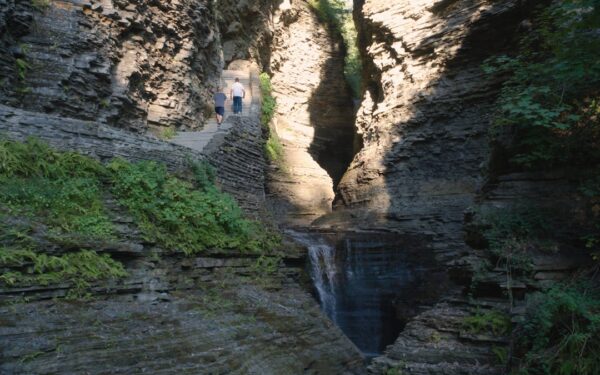
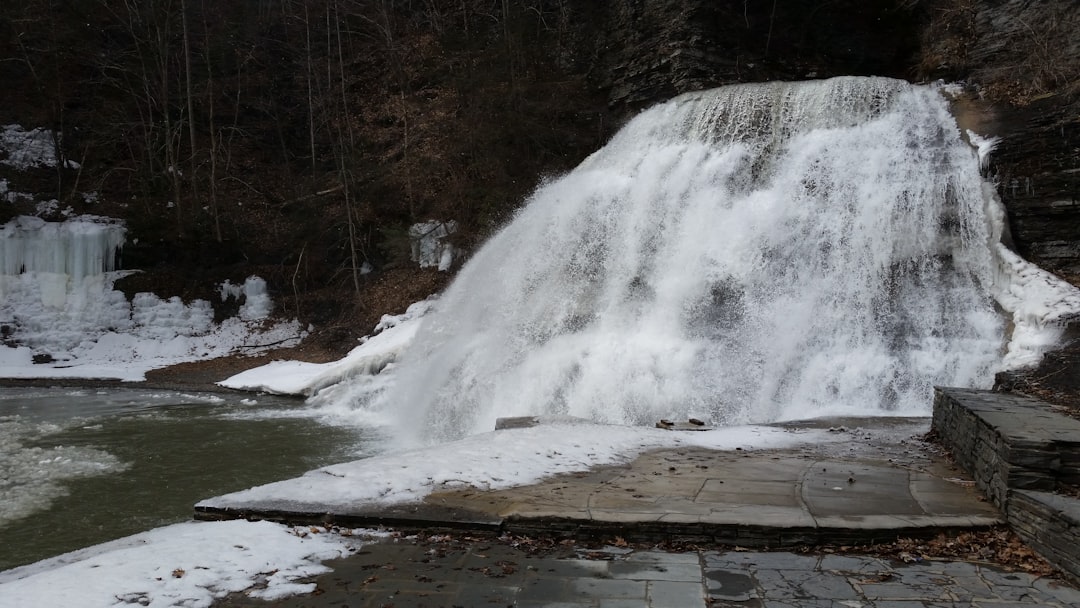
This is the headline, and it earns top billing. Within a 10-mile radius of downtown Ithaca, more than 150 waterfalls carve through layers of shale and limestone deposited 380 million years ago. Three state parks — Taughannock Falls, Robert H. Treman, and Buttermilk Falls — each deliver gorge trails with swimming holes, and a fourth gorge (Cascadilla) runs directly from the Cornell campus into the center of town. Taughannock Falls drops 215 feet in a single plunge, 33 feet taller than Niagara. The gorge trail to its base is flat, three-quarters of a mile, and suitable for strollers. Robert H. Treman has a swimming hole at the base of Lower Falls where you can wade into cold creek water on a hot August afternoon with shale walls rising on either side. No other city this size in the eastern United States offers anything comparable.
The gorge trails are open roughly mid-May through early November, with the exact dates dependent on ice and weather conditions. Water flow is strongest in late May and June; by late August in a dry year, some falls slow to a trickle. The trails at Treman and Buttermilk involve real stair-climbing on uneven, wet stone — wear shoes with grip and leave the sandals in the car.
The Food Scene
Ithaca’s food culture is driven by two forces: Cornell University and Ithaca College together bring roughly 28,000 students into a city of 32,000, creating demand for diverse, affordable restaurants. And the surrounding Tompkins County farmland produces the ingredients those restaurants build menus around. Moosewood Restaurant, the collectively owned vegetarian institution on the Ithaca Commons, has been operating since 1973 and has published cookbooks that shaped how a generation of Americans thought about meatless cooking. Hazelnut Kitchen in Trumansburg, 15 minutes north, sources from nearby farms and changes its menu based on what arrives that morning. Nong’s Thai Kitchen serves green curry that locals debate with genuine conviction.
The Ithaca Farmers Market at Steamboat Landing runs Saturdays from April through December and draws more than 125 vendors — farmers, bakers, prepared-food stalls, and artisans — into a covered pavilion on the Cayuga Lake waterfront. Saturday morning at the market, with wood-fired pizza in one hand and a view of the lake in the other, is one of the better free experiences in the Finger Lakes. Get there by 9:30 a.m. if you want parking without the shuttle.
The Downtown
The Ithaca Commons is a pedestrian mall with heated sidewalks running two blocks along State Street. Independent bookstores (Buffalo Street Books), record shops, ethnic restaurants, and small galleries line both sides. The Commons functions year-round, not just in tourist season, because the university population keeps it alive through winter. It feels like a real downtown rather than a seasonal attraction — people who live here eat lunch on the Commons on a Tuesday in February.
Cornell University
Even without a university affiliation, the Cornell campus is worth a morning. The architecture ranges from Collegiate Gothic stone to Brutalist concrete to I.M. Pei’s modernist Johnson Museum of Art (free admission). The suspension bridge over Fall Creek Gorge offers a vertiginous view 140 feet down to the water. The Cornell Botanic Gardens encompass 3,600 acres of natural areas and cultivated gardens, all free and open to the public. Walking from the Arts Quad down through Cascadilla Gorge to town — eight waterfalls in about a mile — is a commute that exists nowhere else in America.
What Ithaca Does Not Do Well
Weather
This is the honest part. Ithaca averages 160 days of precipitation per year. The winters are long, gray, and cold — average January highs hover around 30 degrees, and lake-effect clouds settle into the valley like a lid. Snow can begin in November and linger into April. Spring is late and muddy. If you visit between November and April and expect sunshine, you will be disappointed. Even summer days can turn overcast and rainy without warning. The locals have a saying: Ithaca is gorges, but it’s also gray. Pack layers and a rain jacket regardless of when you visit.
Wine Tasting Access
Ithaca sits at the southern tip of Cayuga Lake, which means the Cayuga Lake Wine Trail stretches north from here — but with only about 15 member wineries, it is the smaller trail. The bigger draw, the Seneca Lake Wine Trail with 30-plus wineries, is a 40-minute drive west to Watkins Glen or 55 minutes to Geneva. If wine touring is your primary reason for visiting the Finger Lakes, Ithaca is not the most efficient base. Geneva puts you at the center of the action. See our Seneca Lake vs. Cayuga Lake comparison for a full breakdown.
Nightlife
When Cornell is in session (late August through mid-May), Collegetown has bars that stay open late and live music venues that book touring acts. When school is out — particularly from mid-May through late August — the nightlife thins considerably. Ithaca is not a place where you go out at 10 p.m. and wonder what to do. It is a place where you eat a good dinner, walk a gorge at golden hour, and read a book on a porch.
Getting There
Ithaca is roughly 4.5 hours from New York City, an hour from Syracuse, and not served by Amtrak. OurBus and FlixBus run direct service from Manhattan for $30 to $60 one way. The local airport (Ithaca Tompkins International) has limited regional connections through Delta, United, and American, but fares are often high. Once you arrive, a car is necessary for the state parks — they are 5 to 10 miles from downtown, and there is no public transit to reach them. Our NYC-to-Finger-Lakes transport guide covers every option in detail.
Who Ithaca Is Best For
Hikers and waterfall chasers. No contest. If you want to spend two or three days walking gorge trails, swimming in natural pools, and photographing waterfalls, Ithaca is the best base in the Finger Lakes and one of the best anywhere in the Northeast.
Food-focused travelers who value farm-to-table cooking and diverse cuisines. The combination of the farmers market, Moosewood, and the broader restaurant scene makes Ithaca a serious food destination that happens to be surrounded by nature.
Couples and solo travelers who like college-town energy — bookstores, coffee shops, live music, independent culture. Ithaca has a progressive, slightly countercultural personality that either resonates with you or does not. There is no middle ground on the Ithaca vibe.
Families with kids old enough to hike. The gorge trails are engaging for children over about age 6. Younger children do well on the flat Taughannock Falls gorge trail and at the Buttermilk Falls swimming area. The Ithaca Sciencenter, a hands-on science museum downtown, fills a rainy afternoon for ages 3 through 12.
Who Should Consider Somewhere Else
If wine tasting is the primary draw, Geneva is the better base — it sits at the gateway to 30-plus Seneca Lake wineries and has the region’s strongest restaurant-per-capita ratio. If you want a polished, upscale lakefront village, Skaneateles delivers that with cleaner sight lines and less grit. If you need a sandy public beach and family-oriented waterfront, Canandaigua does it better. Ithaca is not trying to be any of those places. It is its own thing — earthy, intellectual, outdoorsy, and a little rough around the edges. For the right visitor, that combination is exactly right.
Best Time to Visit
Late May through mid-October is the window. June delivers the strongest waterfall flows and the fewest crowds. July and August are warmest but busiest at the state parks — arrive at trailheads before 10 a.m. September and early October bring fall foliage, comfortable hiking temperatures, and the return of university energy to downtown. October’s second and third weeks typically deliver peak color in the gorges, with red and orange leaves framed against gray shale and white water.
Avoid planning a gorge-focused trip before mid-May or after early November — trails close for ice and safety. And if you visit in winter, come for the food, the campus, and the Commons, not the waterfalls. The gorges will wait.
The Bottom Line
Ithaca is worth visiting if you value substance over polish. It is a place where the natural landscape is genuinely extraordinary, the food is sourced with care, and the culture has a spine. It is also a place where it rains a lot, the drive from New York City is long, and the most famous attractions are wet stone staircases. If that sounds like your kind of trip, Ithaca will not disappoint. If you want a resort experience with predictable weather and all-inclusive convenience, look elsewhere. Ithaca does not pretend to be something it is not, and that honesty is part of what makes it worth the drive.