The Trail at a Glance
The Keuka Lake Outlet Trail runs 7 miles from Penn Yan to Dresden, following the natural outlet stream that connects Keuka Lake (elevation 717 feet) to Seneca Lake (elevation 445 feet). That 272-foot elevation drop over 7 miles makes the trail gently downhill from west to east — noticeable but not steep. The trail traces a former railroad bed that served mills along the outlet in the 19th century, and the remnants of those mills — stone foundations, walls, and water channels — appear every mile or so along the route.
Unlike the dramatic gorge trails at Watkins Glen or Taughannock Falls, the Keuka Outlet Trail is not about spectacle. There are no 200-foot waterfalls or Instagram-famous slot canyons. What it offers instead is something rarer: a quiet, forested gorge walk with historical depth, running water the entire way, and almost no crowds. On a weekday in June, you may have the entire trail to yourself. This is a walk for people who prefer substance to scenery.
Getting There: The Trailheads
Western trailhead (Penn Yan): The trail begins at the intersection of Seneca Street and Main Street in Penn Yan, near the Birkett Mills. Street parking is available along Seneca Street. This is the higher end of the trail, so starting here means walking predominantly downhill.
Eastern trailhead (Dresden): The trail ends (or begins, depending on your direction) at Route 14 in the hamlet of Dresden, on the western shore of Seneca Lake. Parking is limited to a small pulloff along Route 14.
Most hikers start in Penn Yan and walk east (downhill) to Dresden. The one-way distance is 7 miles, taking 2.5 to 3.5 hours at a moderate pace. You will need a car shuttle (park one car at each end) or plan to turn around at whatever point feels right for an out-and-back.
The most popular option for a day hike is an out-and-back from Penn Yan, covering the first 2 to 3 miles of trail, which includes several of the most impressive mill ruins and scenic sections. A 4- to 6-mile round trip takes 1.5 to 2.5 hours and captures the best of the trail without requiring a shuttle.
What You Will See
The Mill Ruins
Between the 1790s and early 1900s, the Keuka Outlet powered over 30 mills, factories, and water-driven works along its 7-mile length. Gristmills, sawmills, a woolen mill, distilleries, and even a gun factory used the outlet’s reliable water flow. As industry shifted to steam and then electricity, the mills were abandoned. Today, their stone ruins stand in various states of decay along the trail — some are little more than foundation walls buried in moss, while others retain recognizable structures: archways, dam walls, and water channels cut from local stone.
The ruins are not fenced off or interpreted with signs (though a few have small markers). Part of the appeal is discovering them as you walk — rounding a bend to find a 10-foot stone wall emerging from the forest, a waterwheel pit filled with ferns, or a millrace channel still carrying water two centuries after the mill it served fell silent.
The Gorge and Creek
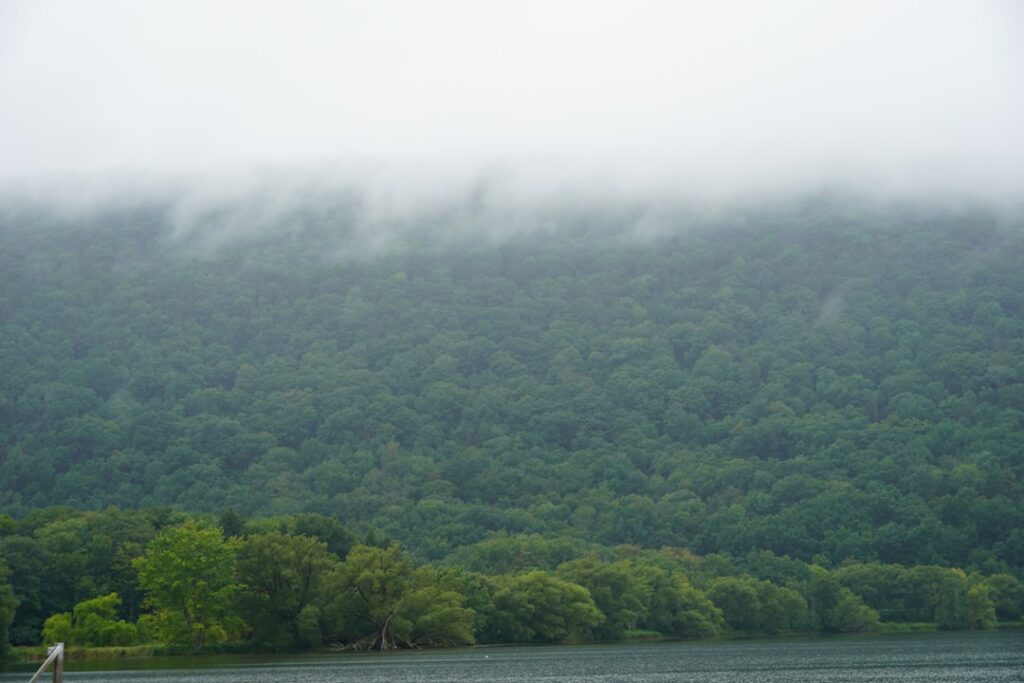
The outlet has carved a shallow gorge through the landscape, with wooded slopes rising on both sides. The creek itself is clear and active — riffles, small pools, and modest waterfalls (5 to 15 feet) appear throughout. None are dramatic individually, but the cumulative effect of walking alongside running water for 7 miles is meditative. Trout fishers work the pools in season (New York fishing license required).
Wildlife
The gorge is a green corridor through an agricultural landscape, which concentrates wildlife along its length. Great blue herons fish the pools. Kingfishers rattle from branch to branch ahead of you. Warblers and vireos nest in the canopy in spring and summer. Deer are common, and you may see mink or otter along the water’s edge if you are quiet and lucky. In winter, the trail sees cross-country skiers and the occasional bald eagle along the outlet near Seneca Lake.
Trail Conditions
The trail surface alternates between packed gravel, packed dirt, and rougher sections near the mill ruins where exposed rock and roots require attention. The former railroad bed provides a mostly flat, wide walking surface, but sections are not maintained to the standard of a paved multi-use trail. Expect some mud after rain, particularly in spring. The trail is suitable for mountain bikes (and biking it is a popular option — the one-way trip takes about an hour by bike), but hybrid or road bikes will struggle with the rougher sections.
The trail is open year-round for hiking, biking, snowshoeing, and cross-country skiing. No entrance fee. Dogs are allowed on leash.
Combining with Other Activities
Penn Yan: Start or end with a visit to the Birkett Mills (America’s largest buckwheat producer, retail shop on Main Street), coffee at Amity Coffee, or a Saturday morning at the Windmill Farm and Craft Market on Route 14A. See our Penn Yan guide for the full rundown.
Keuka Lake wine tasting: After hiking, drive south from Penn Yan along the east branch of Keuka Lake to tasting rooms like Keuka Spring Vineyards or Barrington Cellars. The combination of a gorge walk and wine tasting makes a full, satisfying day.
Dresden and Seneca Lake: If you hike the full trail to Dresden, you emerge on the western shore of Seneca Lake. From here, you can drive north to Geneva (20 minutes) or south to Watkins Glen (30 minutes) for dinner. The junction of the Keuka Outlet and Seneca Lake is a good spot for birding, especially during fall migration.
Best Time to Hike
Spring (April-May): The outlet runs strongest from snowmelt and spring rains. The small waterfalls are at their most dramatic, and wildflowers carpet the forest floor. Mud is likely — waterproof boots recommended.
Summer (June-August): Full canopy provides shade. The trail is dry and easy. Creek pools are inviting (bring a swimsuit and towel for an informal dip at one of the deeper pools).
Fall (September-October): The gorge turns yellow and orange as the hardwoods change. The combination of autumn color, flowing water, and stone ruins is photogenic. Peak foliage is typically the first two weeks of October.
Winter (December-March): The trail is hikeable in winter with appropriate footwear. Snow cover makes it excellent for snowshoeing and cross-country skiing. The mill ruins draped in snow are atmospheric.
For more hiking in the region, see our guides to Robert H. Treman and Buttermilk Falls, waterfalls near Ithaca, and Letchworth State Park.