The Short Answer: 618 Feet
Seneca Lake is 618 feet deep at its maximum depth, measured near the center of the lake along its north-south axis. That makes it the deepest of the 11 Finger Lakes by a significant margin — Cayuga Lake, the second deepest, reaches 435 feet. Seneca is also one of the deepest lakes in the entire United States, ranking alongside Crater Lake in Oregon (1,949 feet), Lake Tahoe (1,645 feet), and Lake Chelan in Washington (1,486 feet) in the short list of American lakes that exceed 600 feet.
For perspective: the bottom of Seneca Lake sits approximately 200 feet below sea level. The lake’s surface elevation is about 444 feet above sea level, but the lakebed plunges so far down that its deepest point is well below the Atlantic Ocean’s surface. You are looking at a body of water where the floor is lower than the beaches of New Jersey, 250 miles to the southeast.
Why It Is So Deep
The Finger Lakes were carved by glaciers during the last ice age, roughly 10,000 to 2 million years ago. Continental ice sheets up to a mile thick advanced southward across what is now upstate New York, following pre-existing river valleys and scouring them deeper with each glacial advance. Seneca Lake’s valley was gouged out by a particularly massive ice lobe that followed the north-south orientation of the terrain, grinding down through layers of Devonian-era shale and limestone that had been deposited 350 to 400 million years earlier.
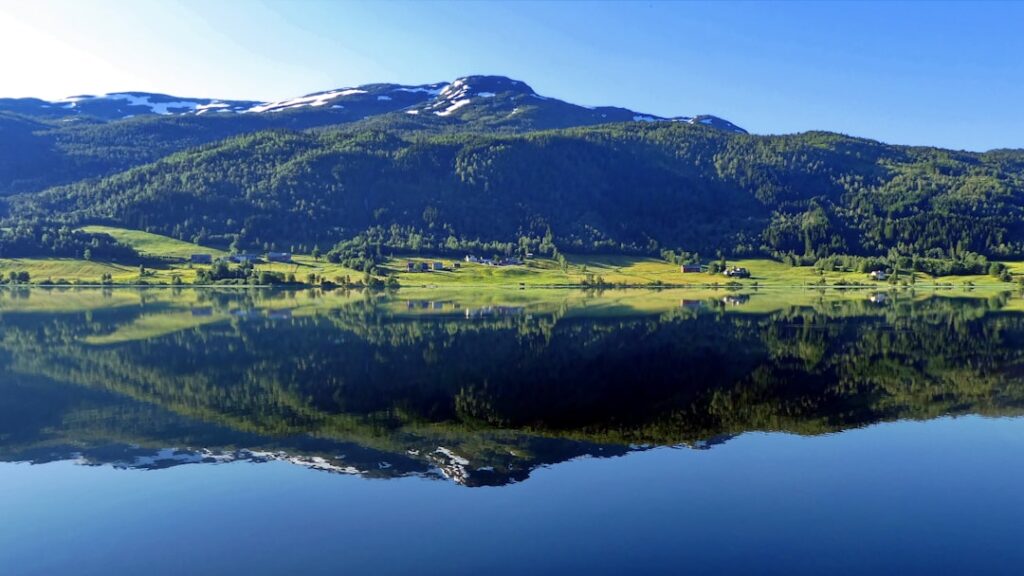
The characteristic shape — long, narrow, and deep — results from the ice moving in a channel. Seneca Lake stretches 38 miles from north to south and is only 3 miles across at its widest point. The depth-to-width ratio creates a trough profile: steep sides plunging to a relatively flat bottom, like a bathtub cut into rock. The glaciers also deposited ridges of gravel and sediment (moraines) at the north and south ends of each lake, which act as natural dams holding the water in place.
The Lake That Never Freezes
Seneca Lake has not fully frozen over since at least 1912, and even that event was a rarity. The depth is the reason. A body of water 618 feet deep contains an enormous volume of thermal energy stored in its lower layers. In autumn, the surface water cools and sinks, mixing with the warmer water below in a process called lake turnover. Seneca Lake turns over twice a year — once in fall and once in spring — as the water column slowly equalizes in temperature. But the sheer volume of water means the lake retains enough warmth through winter to prevent a complete surface freeze, even when air temperatures drop well below zero.
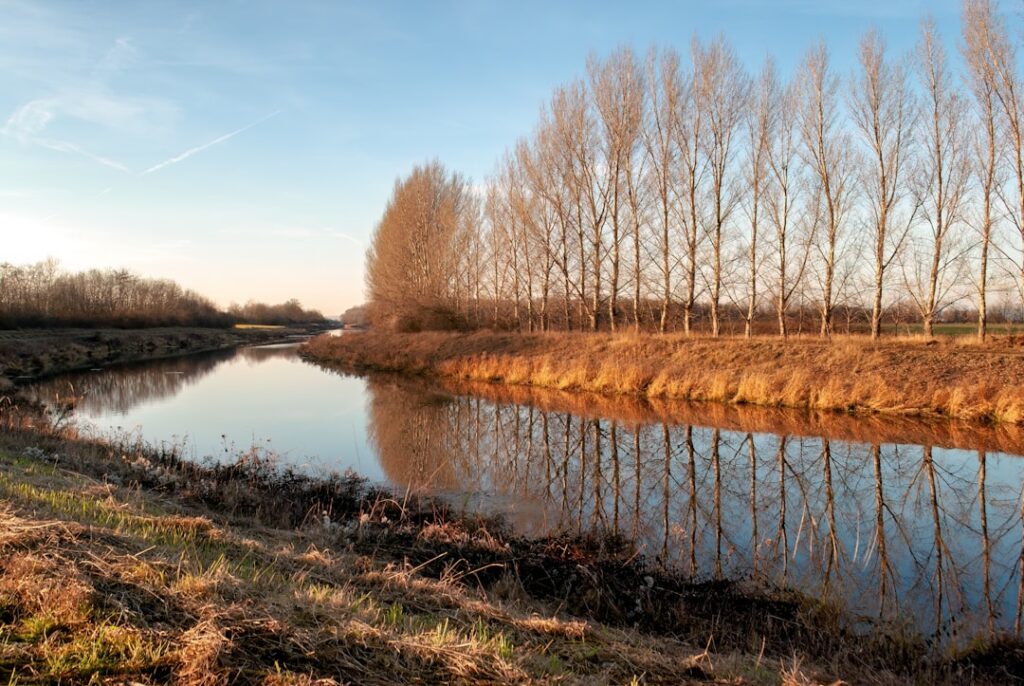
Shallow bays and the very southern end near Watkins Glen occasionally develop thin ice along the shore in January and February, but the main body of the lake stays open water all winter. Cayuga Lake, which is shallower, freezes more frequently, though full freezes are still uncommon. The smaller, shallower Finger Lakes — Canandaigua, Keuka, Skaneateles — freeze more reliably in cold winters.
The Military Connection
Seneca Lake’s depth and its resistance to freezing attracted the attention of the U.S. Navy during World War II. The Seneca Lake Sonar Test Facility, later called the Naval Underwater Systems Center (Seneca Lake Detachment), operated on the lake’s eastern shore near Dresden from the 1940s through the 1960s. The Navy used the deep, thermally stratified water to test sonar equipment, torpedoes, and underwater acoustic devices. The lake’s depth allowed them to replicate ocean conditions — including thermal layers that bend and distort sound waves — in a controlled, freshwater environment. The facility is now closed, but remnants of the testing infrastructure are still visible along the eastern shoreline, and older residents recall the Navy barges anchored mid-lake.
Thermal Layers and the Wine Connection
Seneca Lake’s depth creates a thermal mass effect that directly influences the vineyards on its hillsides. The deep water absorbs heat all summer and releases it slowly through fall and into winter, moderating air temperatures along the lake’s slopes. In autumn, when the surrounding uplands experience their first hard frosts, the lakeside vineyards remain 5 to 10 degrees Fahrenheit warmer — enough to extend the growing season by two to four weeks and allow grapes to ripen fully before harvest.
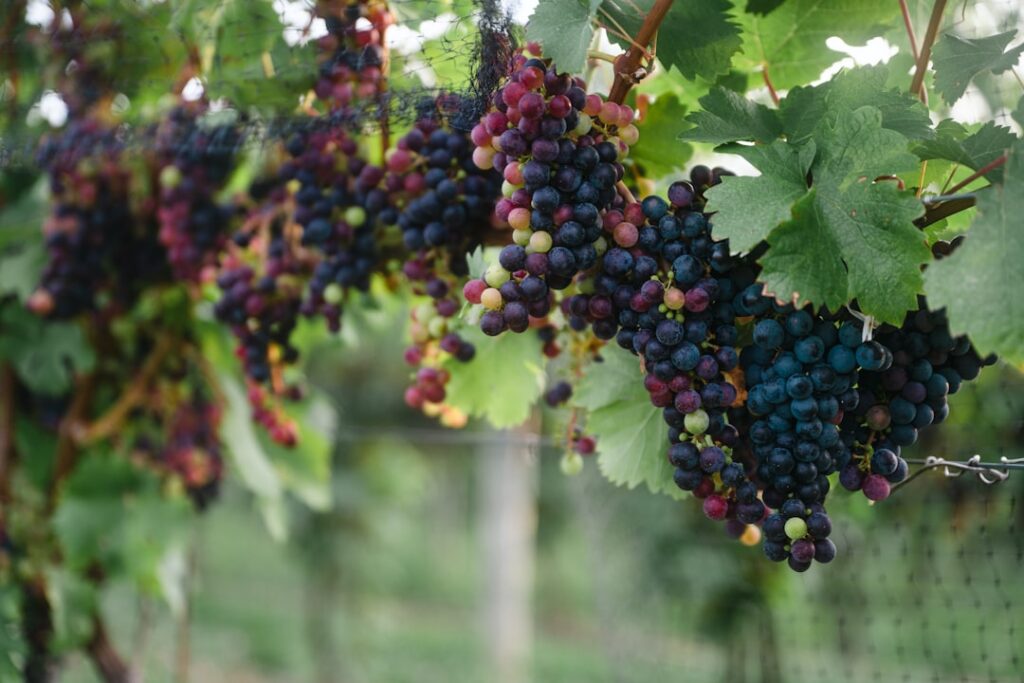
In spring, the effect reverses: the lake’s cold water delays bud break on the vines, protecting them from late spring frosts that would kill the new growth. This temperature buffering is the fundamental reason why Seneca Lake supports over 30 wineries on its slopes. The Riesling that the region is known for thrives specifically because of the microclimate that 618 feet of water creates. The deeper the lake, the stronger the moderating effect — which is why Seneca Lake has more vineyards and wineries than any other Finger Lake.
How Seneca Compares to the Other Finger Lakes
The 11 Finger Lakes vary dramatically in depth. Here is how they rank:
- Seneca Lake: 618 feet (deepest)
- Cayuga Lake: 435 feet
- Skaneateles Lake: 315 feet
- Canandaigua Lake: 276 feet
- Keuka Lake: 186 feet
- Owasco Lake: 177 feet
- Seneca Lake’s depth exceeds the combined maximum depths of Keuka, Honeoye, Otisco, and Canadice Lakes.
Cayuga Lake is longer (40 miles to Seneca’s 38) but significantly shallower. For a detailed comparison of these two lakes for trip planning, see our Seneca Lake vs. Cayuga Lake guide. For lake-specific activities and logistics, our Seneca Lake guide covers the full loop.
Other Strange Facts About Seneca Lake
- Volume: Seneca Lake holds approximately 4.2 trillion gallons of water — more than all other Finger Lakes except Cayuga, which holds roughly 9.4 trillion gallons due to its greater length and width despite being shallower.
- The Seneca Guns: Residents along the lake have reported unexplained booming sounds — sometimes compared to cannon fire — for over a century. Called the “Seneca Guns” or “Seneca Drums,” these sounds have no confirmed explanation. Theories range from natural gas escaping from the lakebed to thermal cracking of rock formations to distant military activity at the former Seneca Army Depot. The sounds continue to be reported intermittently.
- Water clarity: Despite its depth, Seneca Lake’s water clarity varies. Secchi disk readings (a measure of how far down you can see a white disk) typically range from 6 to 15 feet, depending on the season and algae conditions. The lake is not as clear as Skaneateles Lake, which serves as an unfiltered water supply for Syracuse.
- The lake warms slowly: Surface water temperatures at Seneca Lake typically reach swimmable levels (above 68 degrees Fahrenheit) by late June or early July, later than shallower lakes like Canandaigua and Keuka that warm by mid-June. The deep water remains cold — around 39 degrees Fahrenheit — year-round below the thermocline, regardless of surface conditions.